Inklusive Hochschule NRW: Making every inclusion initiative across NRW universities findable
Concept, design and development of a web platform documenting good-practice initiatives for inclusive higher education across universities in North Rhine-Westphalia.
Role
Concept · Information Architecture · UX/UI · Web Development · Automation · Accessibility · Project Coordination
Technologies
Python · Bootstrap · JavaScript · HTML/CSS
From heterogeneous content to a structured digital platform
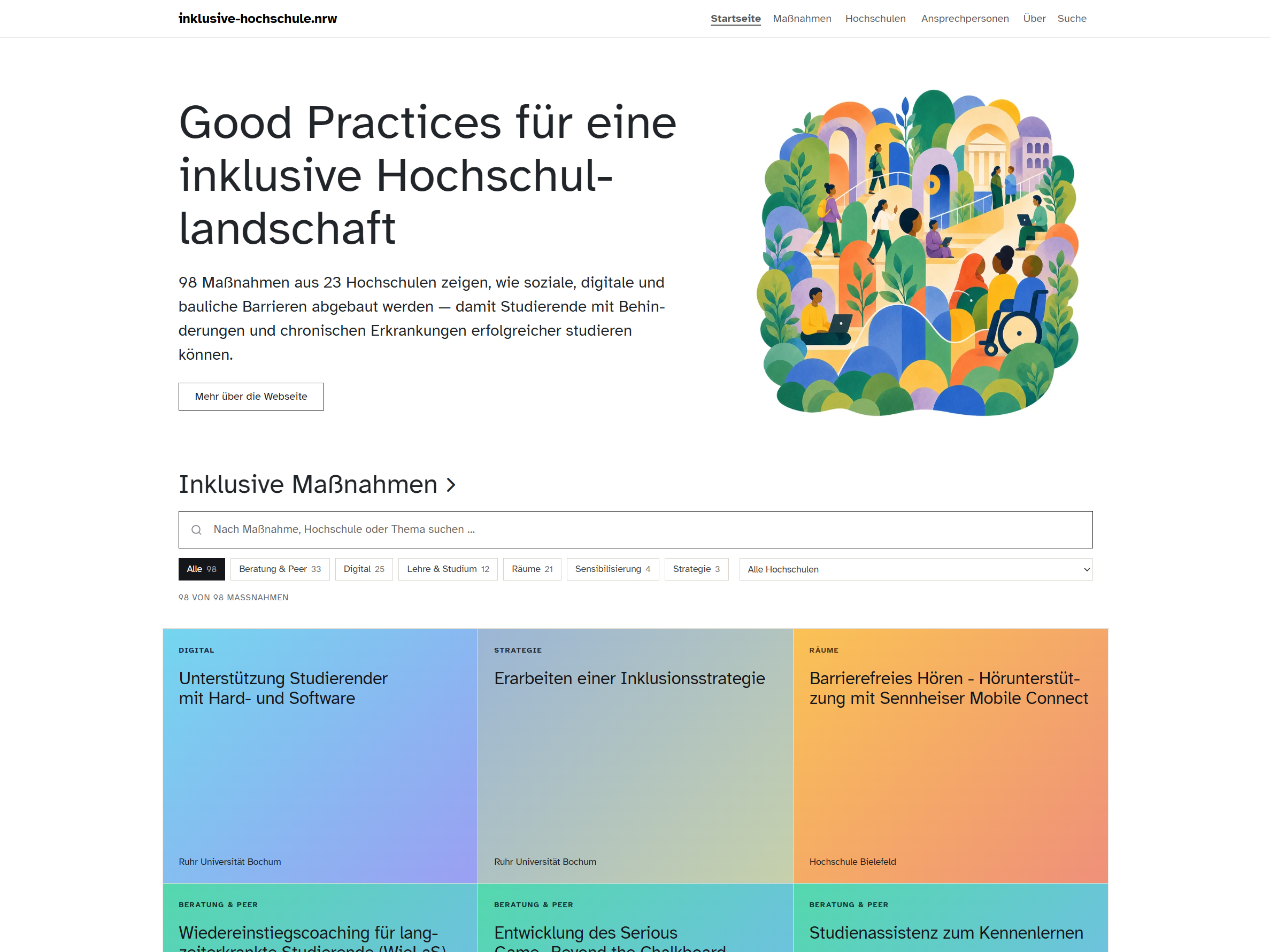
Universities across North Rhine-Westphalia have developed a wide range of initiatives to make higher education more inclusive. The challenge was to bring these different approaches together in a platform that is easy to navigate, accessible and maintainable.
With 98 initiatives across 23 universities, the project required more than the design of individual pages. The content had to be transformed into a consistent information structure that could support different ways of exploration while remaining manageable as the platform grew.
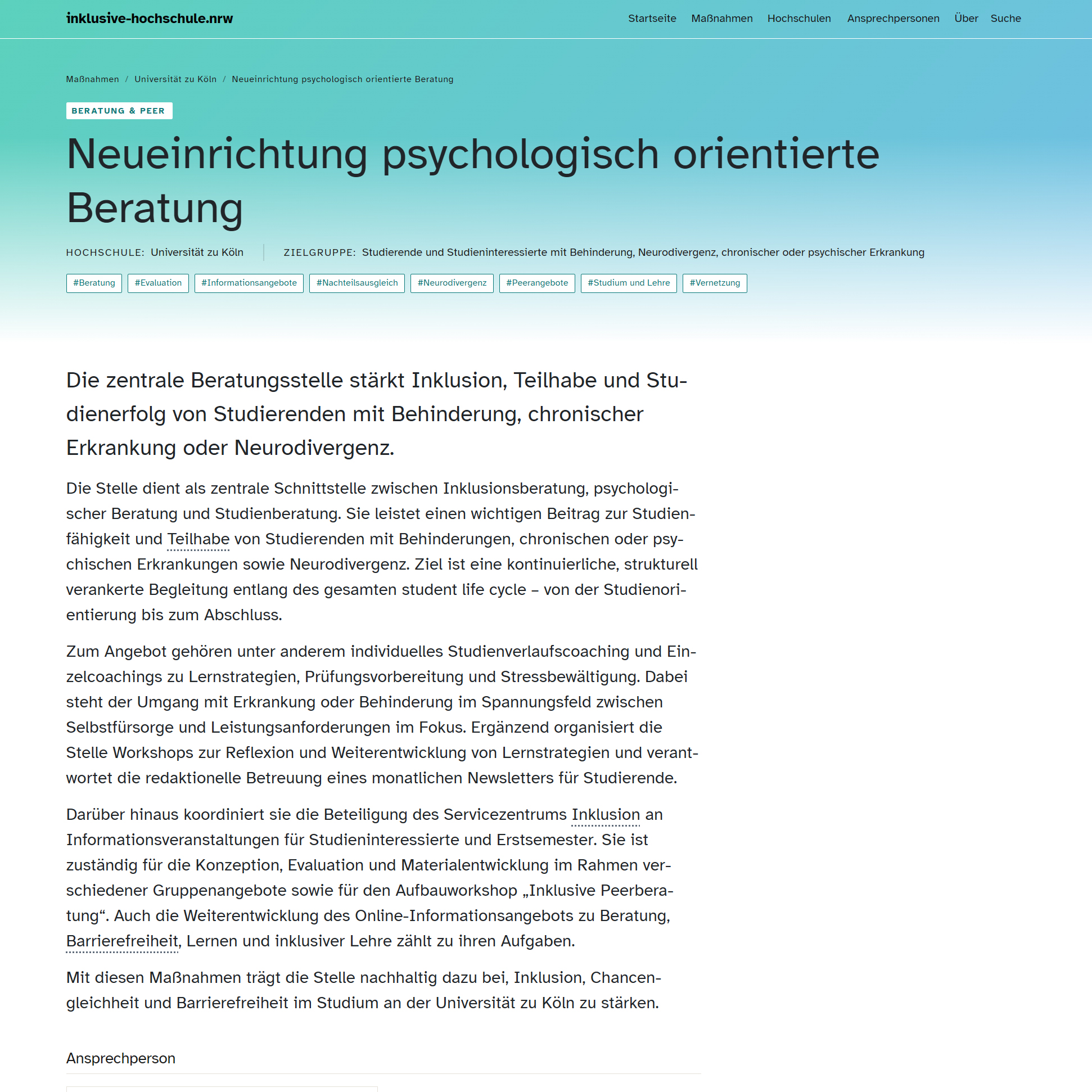
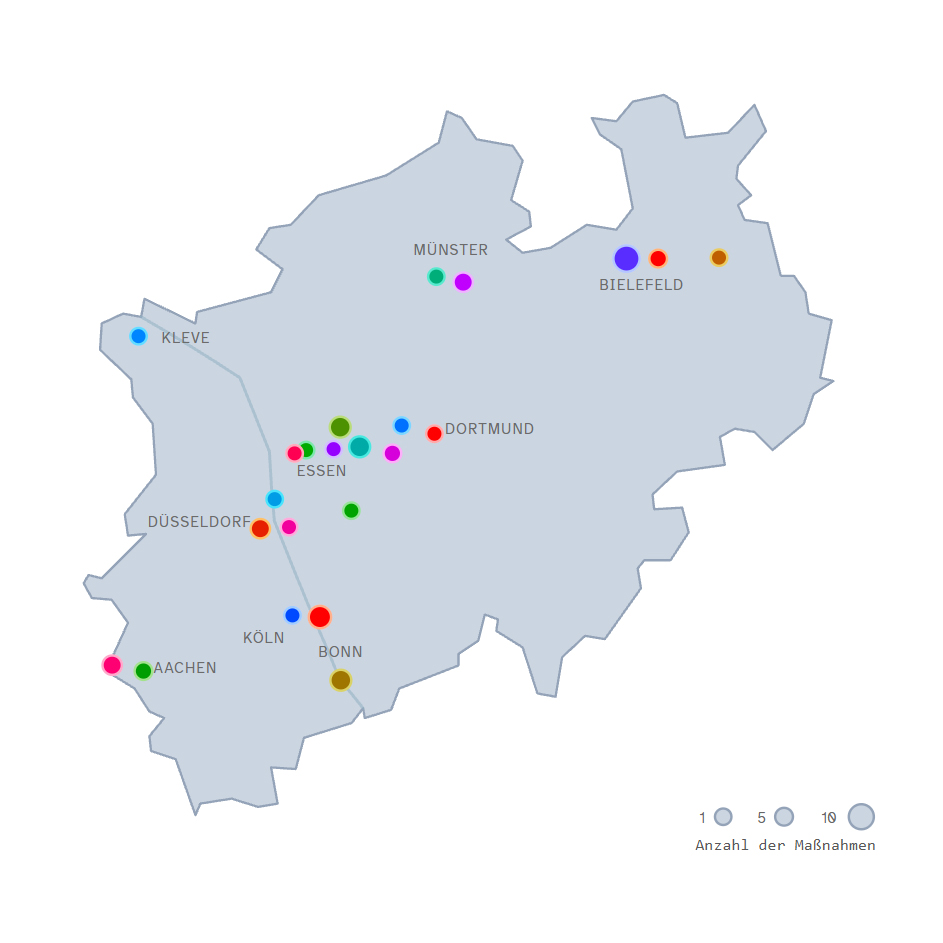
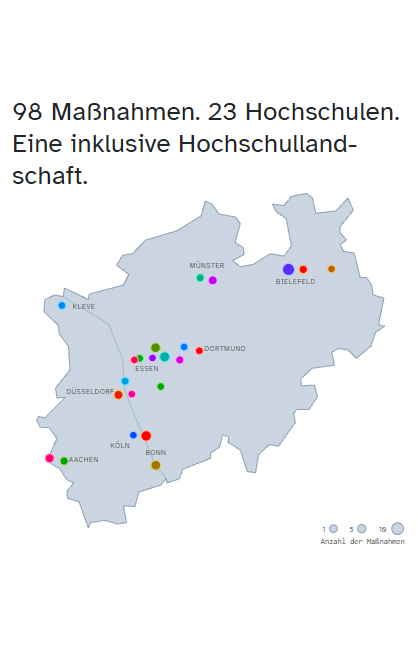
I developed the platform from the initial information architecture through interface design and technical implementation. The content was structured around universities, individual initiatives and thematic areas, creating several complementary entry points. Users can browse and filter measures, explore participating universities, navigate individual detail pages or access the content geographically through an interactive map of North Rhine-Westphalia.
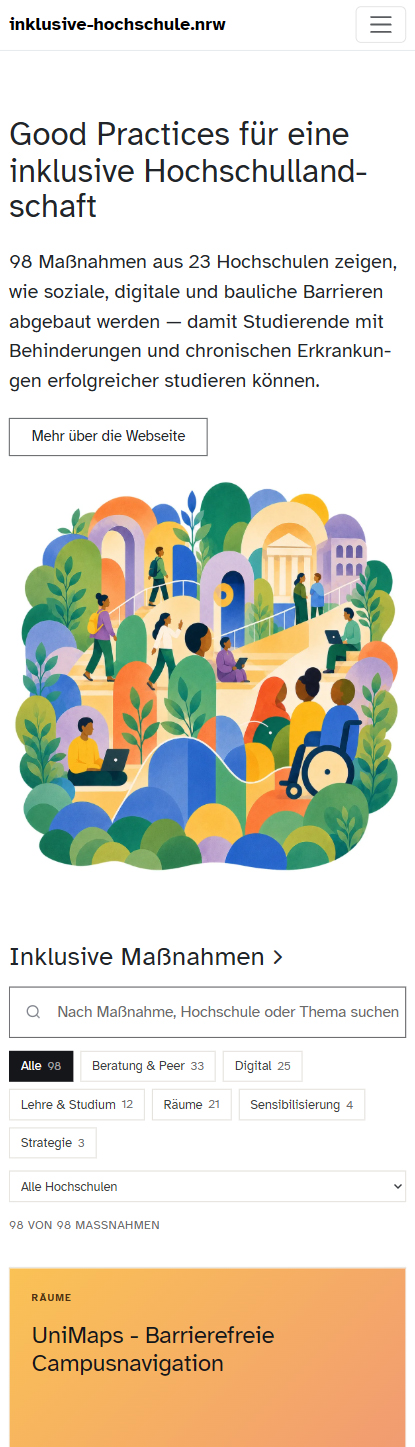
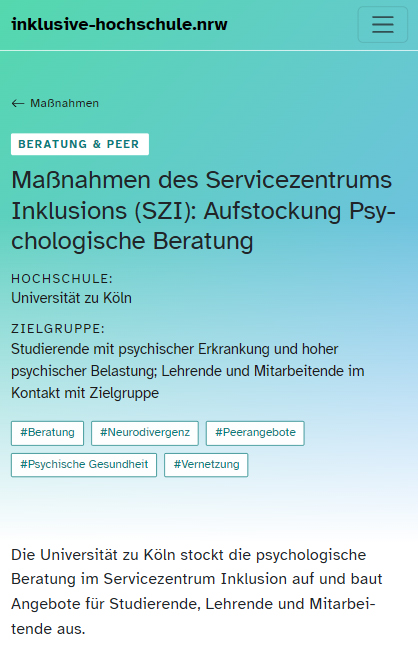
The interface was designed to keep this comparatively large amount of information understandable without introducing unnecessary visual complexity. Reusable page structures, clear hierarchy and responsive layouts provide consistency across the platform while still allowing the individual initiatives to retain their specific content.
Combining structured data, automation and accessibility
A central part of the project was the question of how to maintain a large number of interconnected pages efficiently. Creating and updating each page manually would have introduced substantial repetitive work and increased the risk of inconsistencies.
I therefore developed a Python-based workflow that processes structured project data and supports the generation of the website's individual pages. This approach connects content, metadata and page structures within one publishing process and reduces the amount of manual maintenance required.
The technical implementation was developed alongside the interface rather than treated as a separate layer. Structured information is reused across measure pages, university views, thematic overviews and navigation elements, creating a consistent system instead of a collection of isolated pages.
Accessibility was also considered throughout the design and implementation process. The platform uses semantic page structures, keyboard-accessible interaction patterns, visible focus states and responsive layouts. Accessibility therefore influenced not only individual interface elements, but also broader decisions about navigation, hierarchy and interaction.
Outcome
The final platform brings together 98 good-practice initiatives from 23 universities across North Rhine-Westphalia and makes them accessible through a structured system of overview, university and detail pages.
In total, the project comprises 177 generated web pages supported by a Python-based publishing workflow. The result combines information architecture, interface design and automation in a maintainable digital platform designed for a heterogeneous and growing body of content.