Forschung Soziologie: Making a faculty's research easy to discover
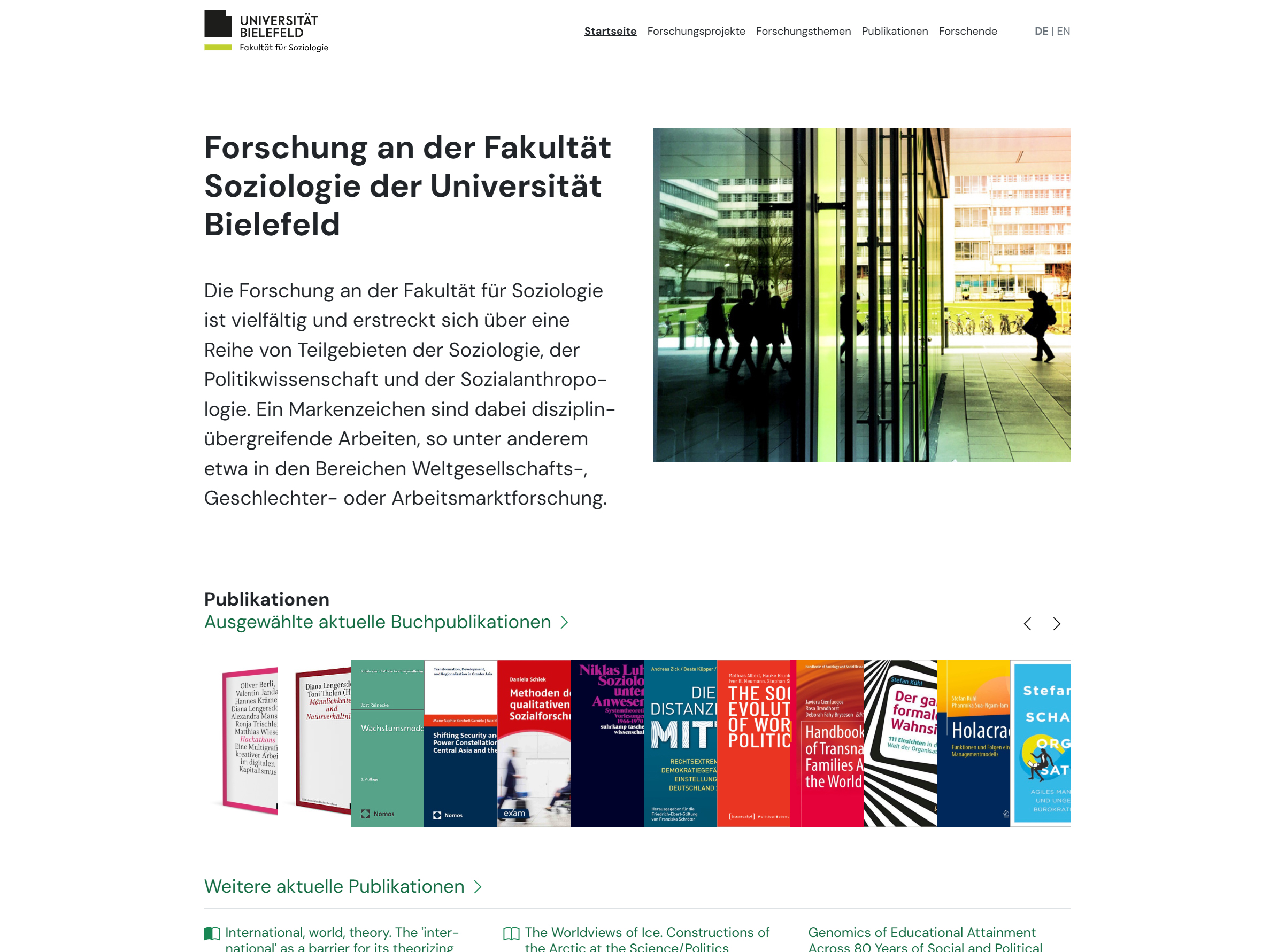
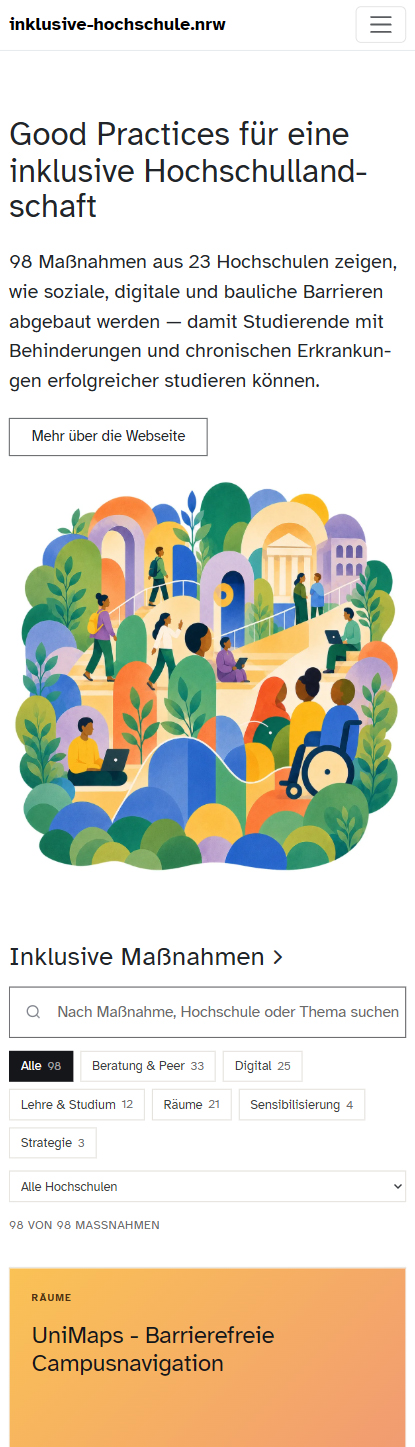
Concept, design and development of a research website making the activities of the Faculty of Sociology at Bielefeld University more accessible, structured and visible online.
Role
Concept · Information Architecture · UX/UI · Web Development · Automation · Accessibility · Project Coordination
Technologies
Python · Bootstrap · HTML/CSS
Making complex research activities accessible online
Academic research is often distributed across institutional websites, individual project pages and different organizational structures. For users outside these structures, gaining an overview of current research activities can therefore be difficult.
The aim of Forschung Soziologie was to create a dedicated digital platform that presents the research activities of the Faculty of Sociology at Bielefeld University in a more accessible and coherent way.
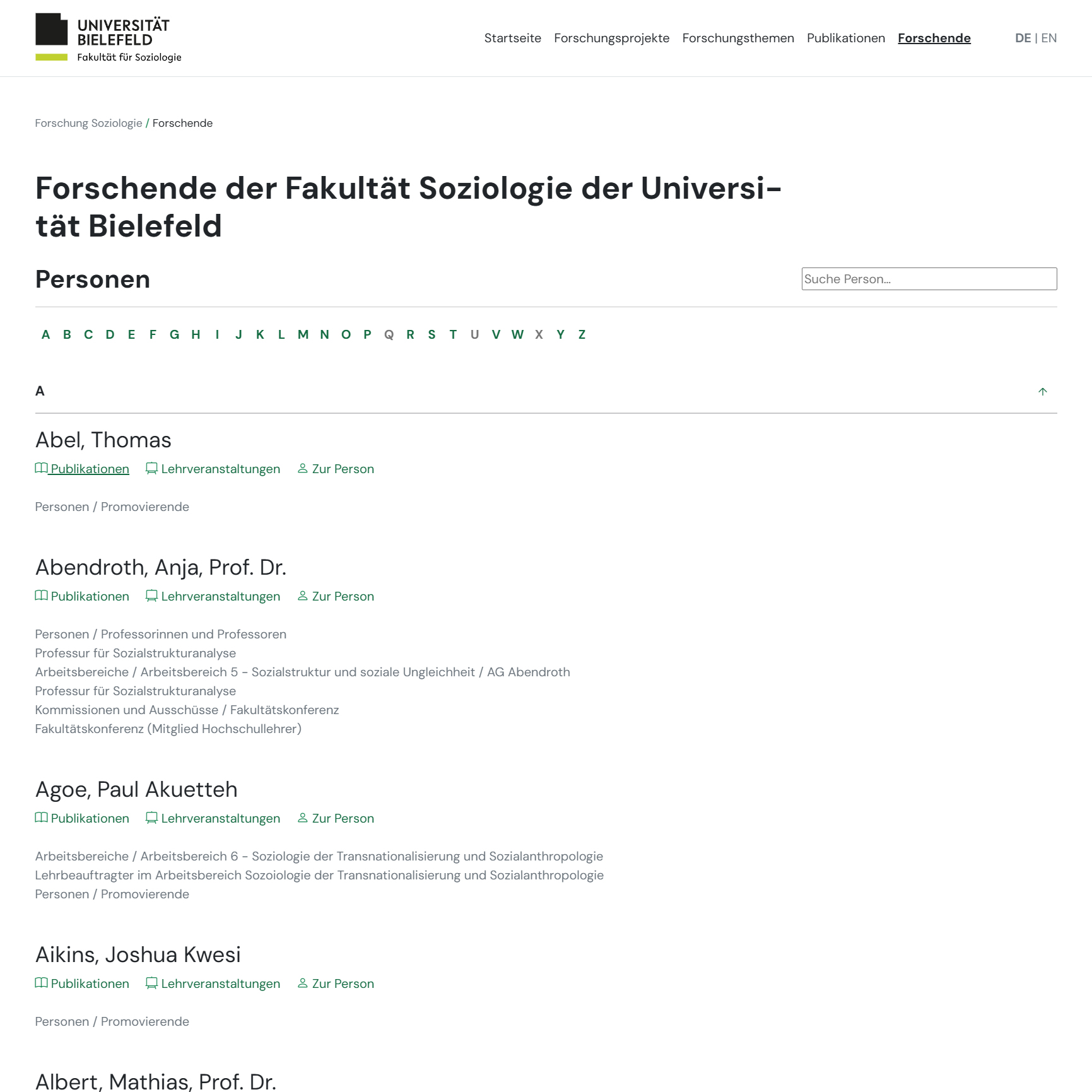
I developed the website from the initial content concept and information architecture through interface design and technical implementation. Relevant research content was selected, structured and editorially prepared to create a clearer entry point into the faculty’s research landscape.
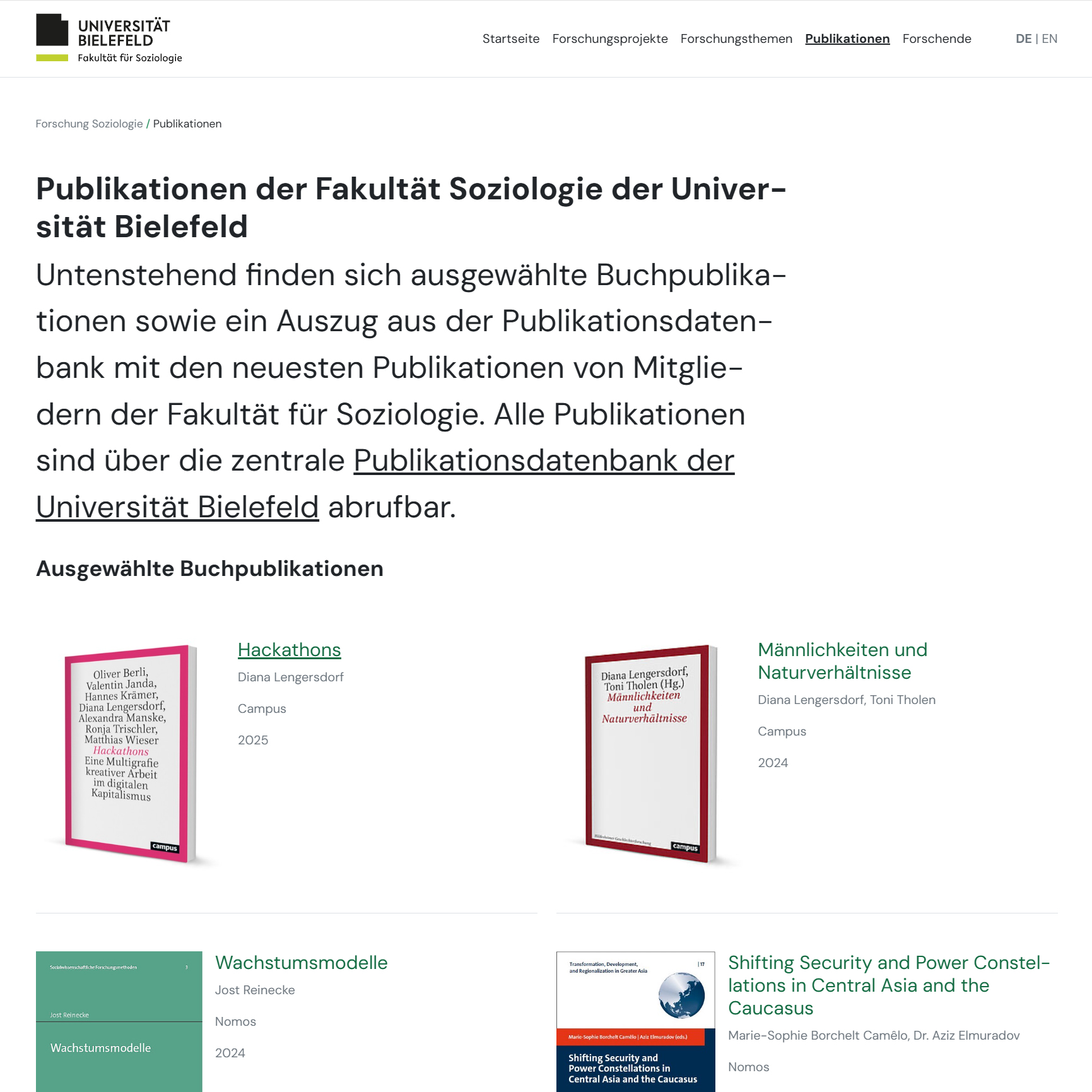
The information architecture was designed around the needs of users rather than the internal structure of the university. Content was organized into consistent page structures and navigation paths, making it easier to explore research topics and related activities across the faculty.
The visual design follows the same principle. A clear hierarchy, responsive layouts and restrained interface elements keep the focus on the research content while providing a consistent experience across the website.
Combining research communication with automated publishing
Maintaining a separate research platform also raised a practical question: how could existing university content be reused without introducing unnecessary manual work?
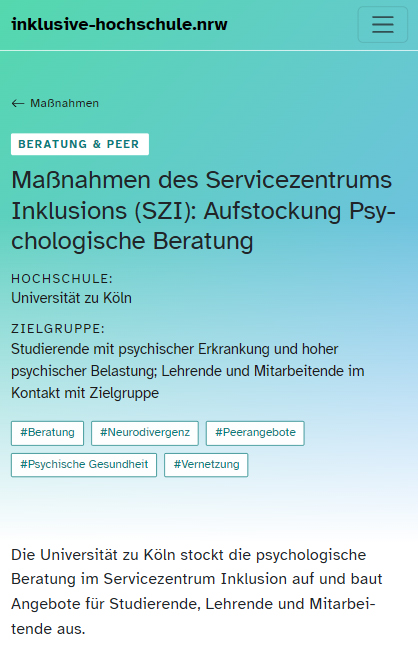
I developed a Python-based workflow to retrieve publicly available university content and transform it into structured information for the website. This supported both the initial creation of the platform and the subsequent updating of its content.
Instead of treating content management and web development as separate tasks, the workflow connected source information, content structure and presentation. This reduced repetitive work and made it easier to keep the website aligned with information already available across the university’s digital infrastructure.
The project therefore combined several layers that are often handled independently: research communication, editorial structuring, interface design and technical automation.
Designing for visibility and discoverability
An important objective of the platform was not only to organize research information, but also to improve its visibility beyond the university’s existing web structures.
Content structure, page hierarchy and technical implementation were therefore designed with discoverability in mind. By creating a dedicated and clearly structured research platform, the project provided search engines as well as users with more focused access to the faculty’s research activities.
At the time of measurement, the website reached 5,000–6,000 visits per month and ranked among the top three Google results for the search term “Forschung Soziologie.”
These results demonstrate that the platform functioned not only as an internal presentation of research activities, but as an external entry point into sociological research at Bielefeld University.
Outcome
Forschung Soziologie transformed distributed research information into a dedicated digital platform for research communication.
The project combined information architecture, editorial content structuring, responsive web design and Python-based automation within a single publishing workflow.
With 5,000–6,000 visits per month and a top-3 Google ranking for “Forschung Soziologie” at the time of measurement, the platform significantly increased the digital visibility of the faculty’s research activities while providing users with a clearer and more structured way to explore its research.