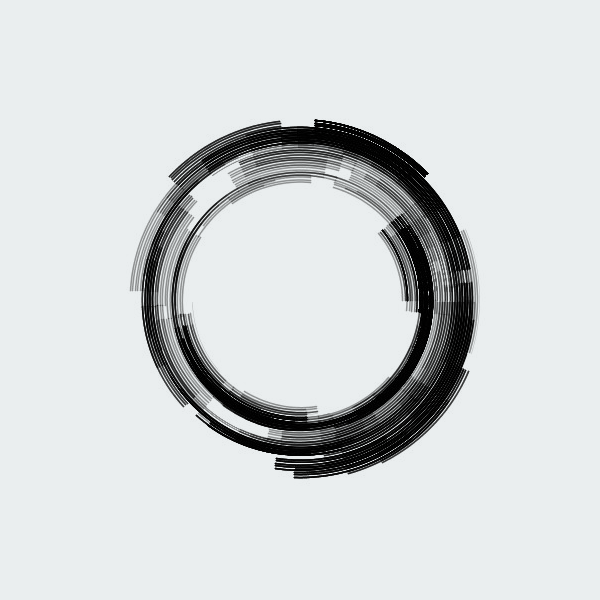
Cup Rings: Visualising the Hidden Structure of Websites
A computational data art project that transforms the hidden structure of websites into visual portraits, revealing patterns of complexity and density normally invisible behind the interface.
How a Cup Ring is made
A webpage consists of thousands of nested elements — containers holding columns, cards, headlines, images and words. This structure is different for every website, but normally remains invisible behind the interface.
Cup Ring turns this structure into a visual portrait. Each element becomes an arc: its nesting depth determines the distance from the centre, while its position on the page determines the angle. Nothing is positioned by hand. Dense pages create dense rings, sparse pages leave space, and different website architectures produce distinct visual patterns.
The result sits between data visualisation and portraiture. Instead of showing what a website looks like, Cup Ring reveals the structure underneath it.

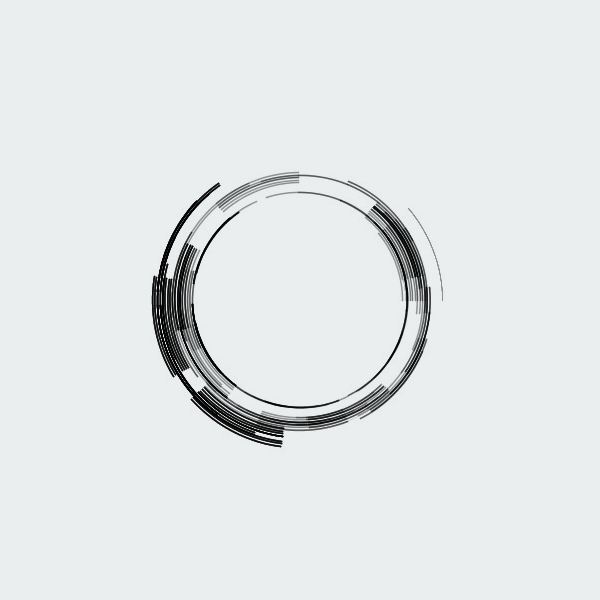
blogger.com
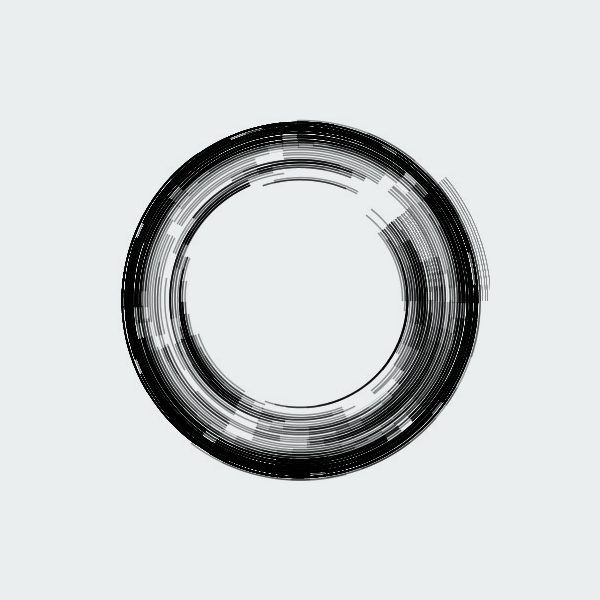
linkedin.com
The sitting
Before a website can leave its trace, it has to sit still. A webpage is never finished the moment it appears: it keeps assembling itself, adding images, menus and blocks of text long after the first glimpse. Caught too early, a page looks almost empty. One site showed barely a dozen parts in its first moment and more than three and a half thousand once it had settled.
So every ring begins with waiting. Only when the page has stopped changing is its structure taken. Some websites never sit at all. They hide behind verification screens or turn the visit away, and leave no ring behind.
Drawing without a hand
Once the page is still, the drawing makes itself. Every part of the page leaves a single arc, placed by the rules described above. No arc is drawn, moved or corrected by hand.
The authorship lies in the rules rather than in the strokes. I decide how a website is translated; the website decides what the ring becomes. The same rules applied to a newspaper, a shop and a search engine produce three entirely different images. So far, nearly 450 websites have sat for their portrait.
The texture of the drawing
Look closely at a Cup Ring and its lines begin to shimmer. Arcs that land in almost the same place snap onto exactly the same position, and where they gather, a fine moiré appears, like the grain of paper or the bite of an etching plate.
The shimmer is not an effect added afterwards. It comes from the way the arcs are placed, and it is part of what gives every ring its character.
When structure hides itself
The busiest websites pile so many arcs on top of one another that their rings turn almost black. In one dense example, nearly three out of four arcs fell on a place already taken. The structure is all there, but it disappears inside its own density, just as the interface hides it in the first place.
Loosening the arcs, giving each one a little more room, lets that structure come back into view without changing what the ring is made of.
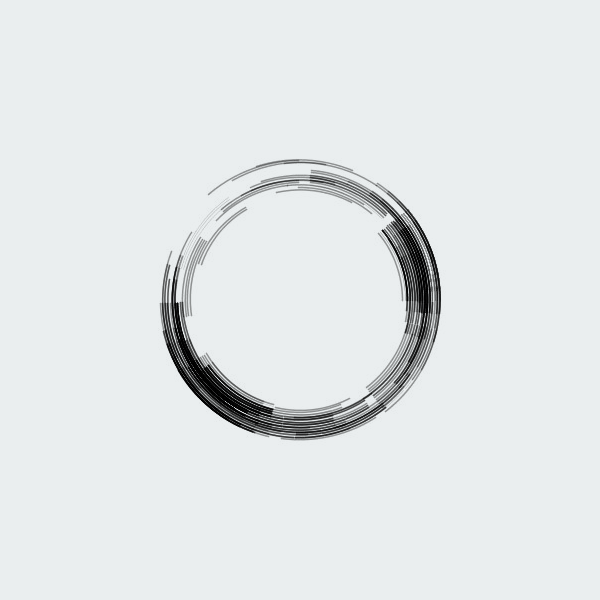
flickr.com
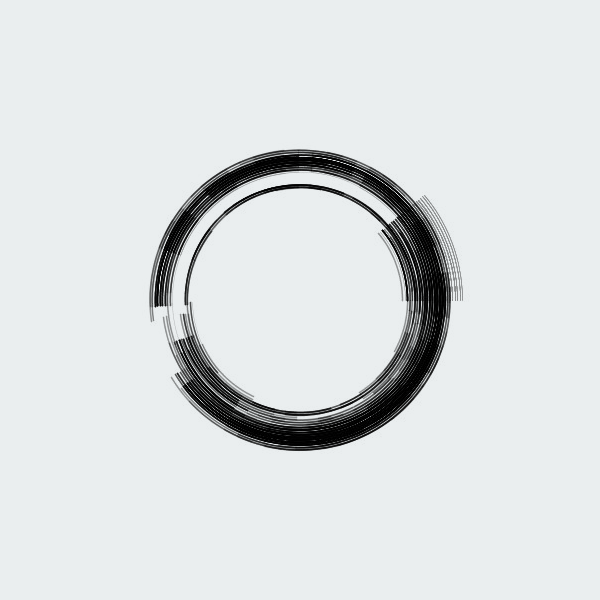
bloomberg.com
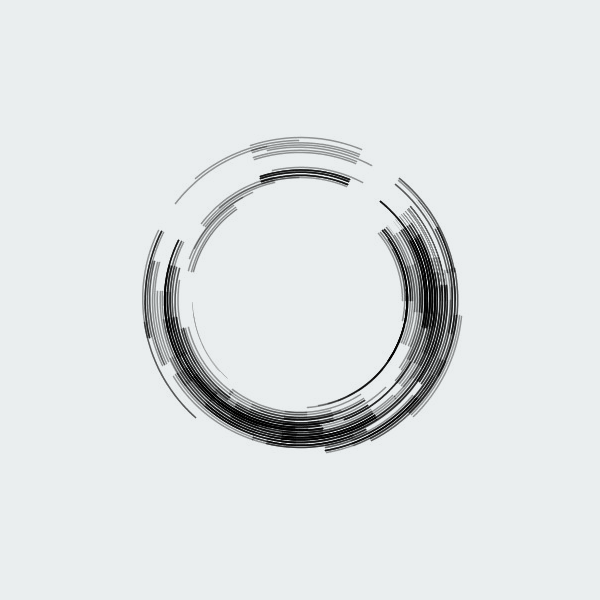
soundcloud.com
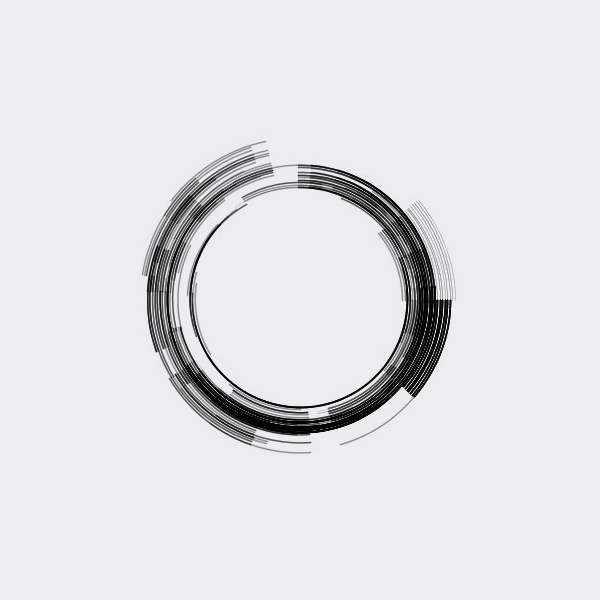
vimeo.com
Role
Concept · computational design · data visualisation & engineering
Technologies
Python · headless Chromium · originals in Processing
Source
MOZ Top 500